Redesigning the User Experience of the Online Football Game “Cluby”
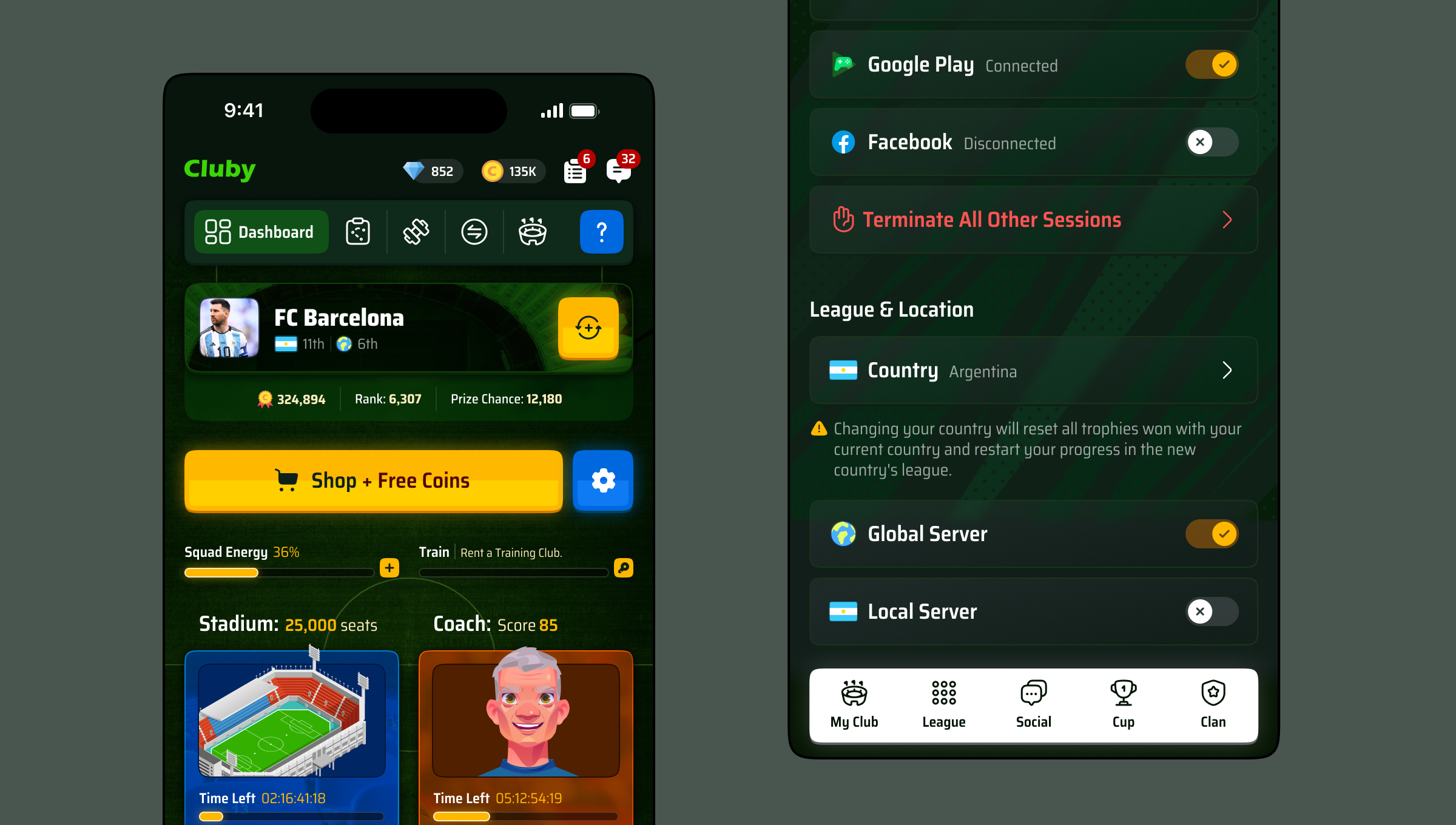
The complete UX/UI redesign of the online football game Cluby was one of the most comprehensive projects I have worked on — a competitive online football platform where users face other real players on a daily basis and manage their own virtual football teams. In this project, more than 100 dedicated screens were designed and rebuilt, covering a wide range of features including team management, lineup configuration, player transfers, stadium upgrades, coach systems, performance analytics, and in-game social interactions. My focus in this redesign went far beyond visual aesthetics. I implemented a fully data-driven design approach, built on structured user research and behavioral analysis. The process included:
- Analyzing user behavior through click patterns, exit rates, session duration, and scenario completion rates
- Conducting more than 20 in-depth user interviews with active and semi-active users
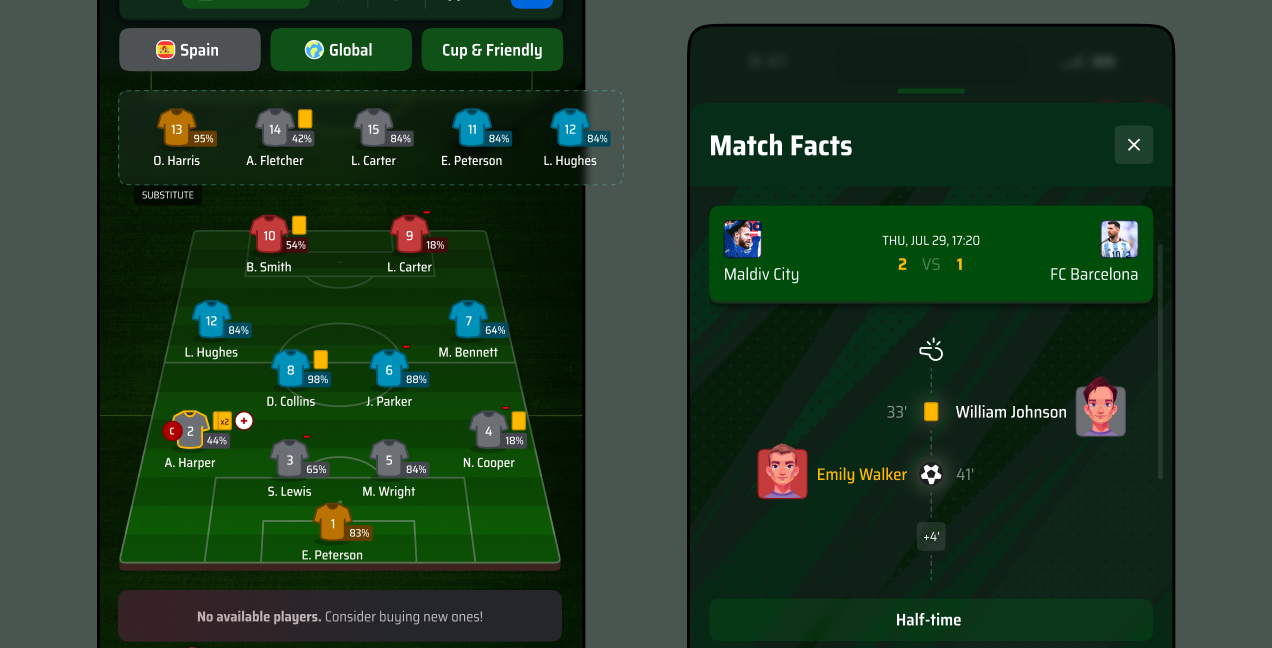
Identifying key friction points in critical user journeys such as:
- Player purchases
- Pre-match lineup creation
- Social feature interactions
- Designing and testing multiple alternative user flows to deliver smoother and more intuitive experiences
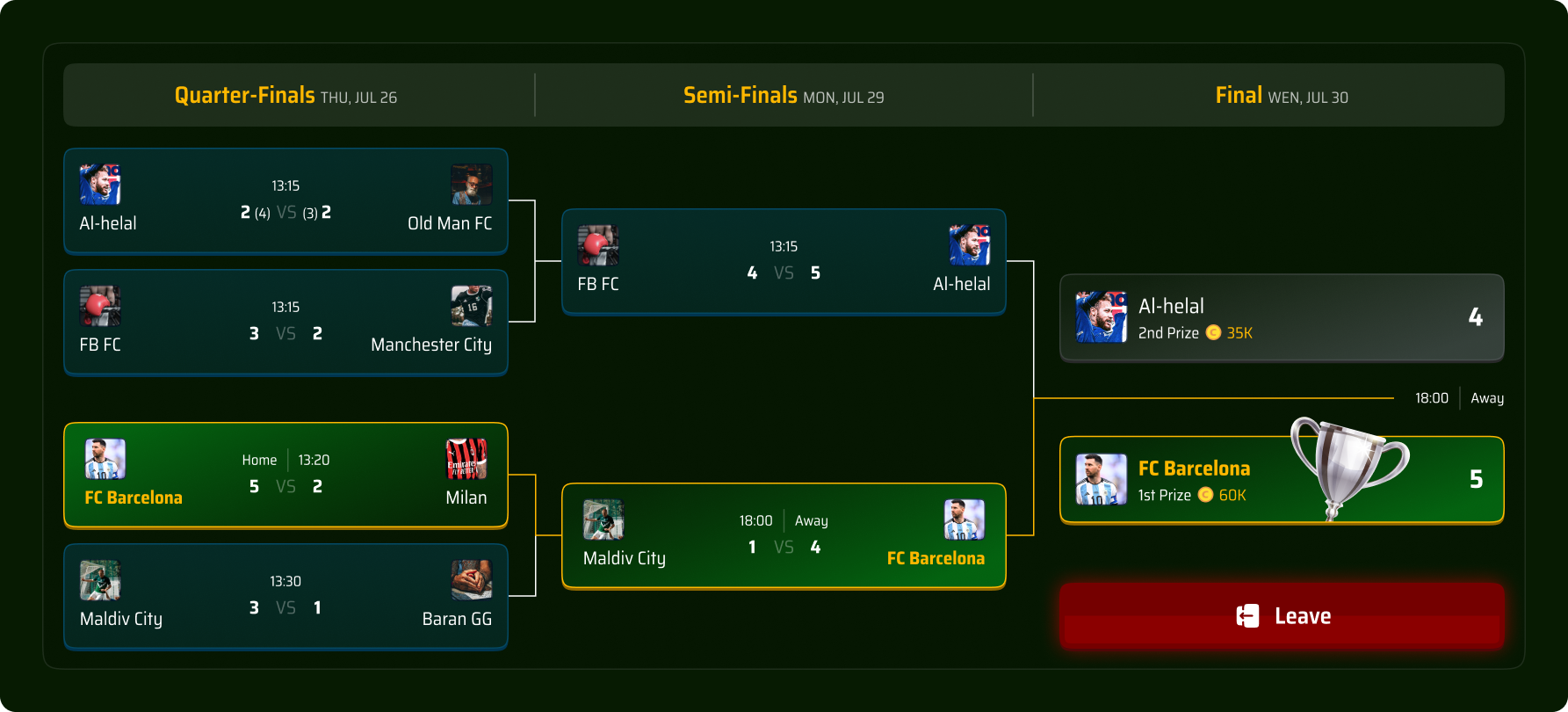
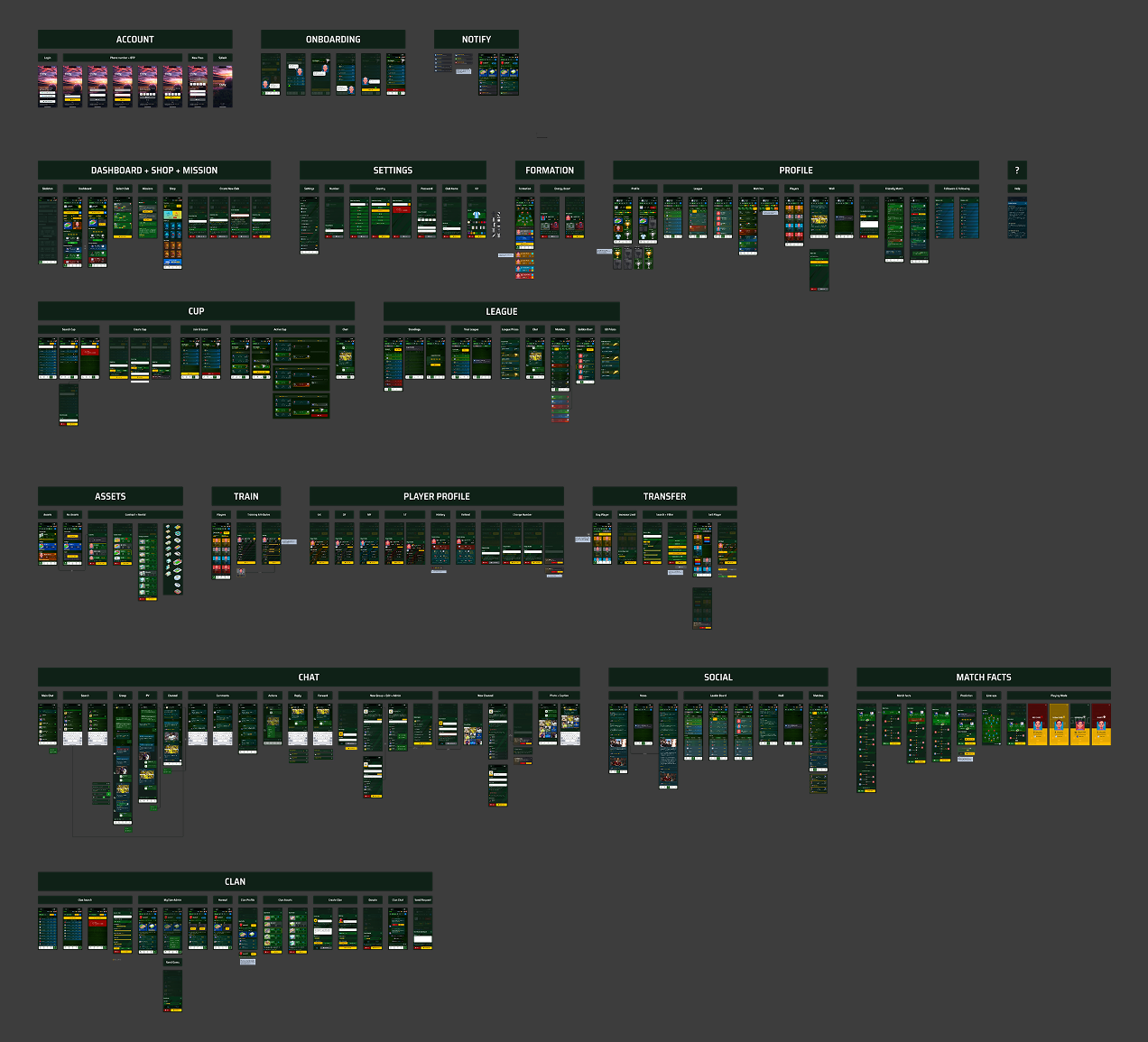
From a structural and system level, this project involved:
- Designing over 35 distinct user flows
- Building more than 250 UI components as part of a scalable design system
- Defining over 500 interaction states and micro-interactions across buttons, cards, screens, and modal experiences
One of the most complex parts of the project was the redesign of the game’s social ecosystem, including in-game chat, clan systems, invitations, role management, and group interactions. The main focus in this area was to strengthen users’ sense of belonging and long-term engagement.
The results of this redesign included measurable product improvements:
- A 40% reduction in the average time to complete core user tasks
- A 65% increase in key flow completion rates
- A significant improvement in user satisfaction based on qualitative testing
All design decisions throughout the project were rooted in user research, usability testing, data analysis, and iterative feedback cycles, resulting in a scalable, intuitive, and engaging experience for both new and experienced players.